A sermon on John 19:25-30 for Good Friday. Delivered by Pastor Caleb Strutz.
One feature commonly found in Good Friday services is a meditation on Jesus’ seven words from the cross. We read all seven of these in the Passion History at last week’s midweek service. You could have a whole sermon on any one of these, they’re all so rich and deep and meaningful. So rather than attempt to cover all seven, today we’ll reflect on the three words from the cross recorded for us by John in his Gospel. Each Gospel on its own has certain themes that it wants to emphasize. And the picture that John paints for us of Good Friday is not one which primarily emphasizes Jesus’ suffering, which is often the direction that our minds go. Instead, especially in Jesus’ words from the cross, we see Jesus overcoming this suffering and conquering death, even as He dies.
I. “Woman, behold your son!”
As Jesus hung on the cross, His suffering was unimaginable, incomparable. Crucifixion was the most excruciating method of execution that the notoriously cruel Romans could come up with. On top of that, Jesus had already been beaten and flogged, an ordeal which could very well kill you on its own. And that’s only the physical. Spiritually, Jesus has taken upon Himself the sins of the world and their punishment. He suffered the fires of hell on the cross. It’s easy to imagine Jesus being entirely engrossed in the task at hand, overwhelmed by the suffering, focused on the supremely important task of redemption.
Certainly we would be. How often does pain or hurt or sadness cause us to turn inwards, shut everyone and everything else out, make us blind to the needs of others? When we suffer it makes us selfish. We sinfully have a low pain tolerance.
But Jesus doesn’t. He’s not blinded by the pain, but entirely conscious of everything around Him. He turns to focus on earthly matters. He provides for His mother.
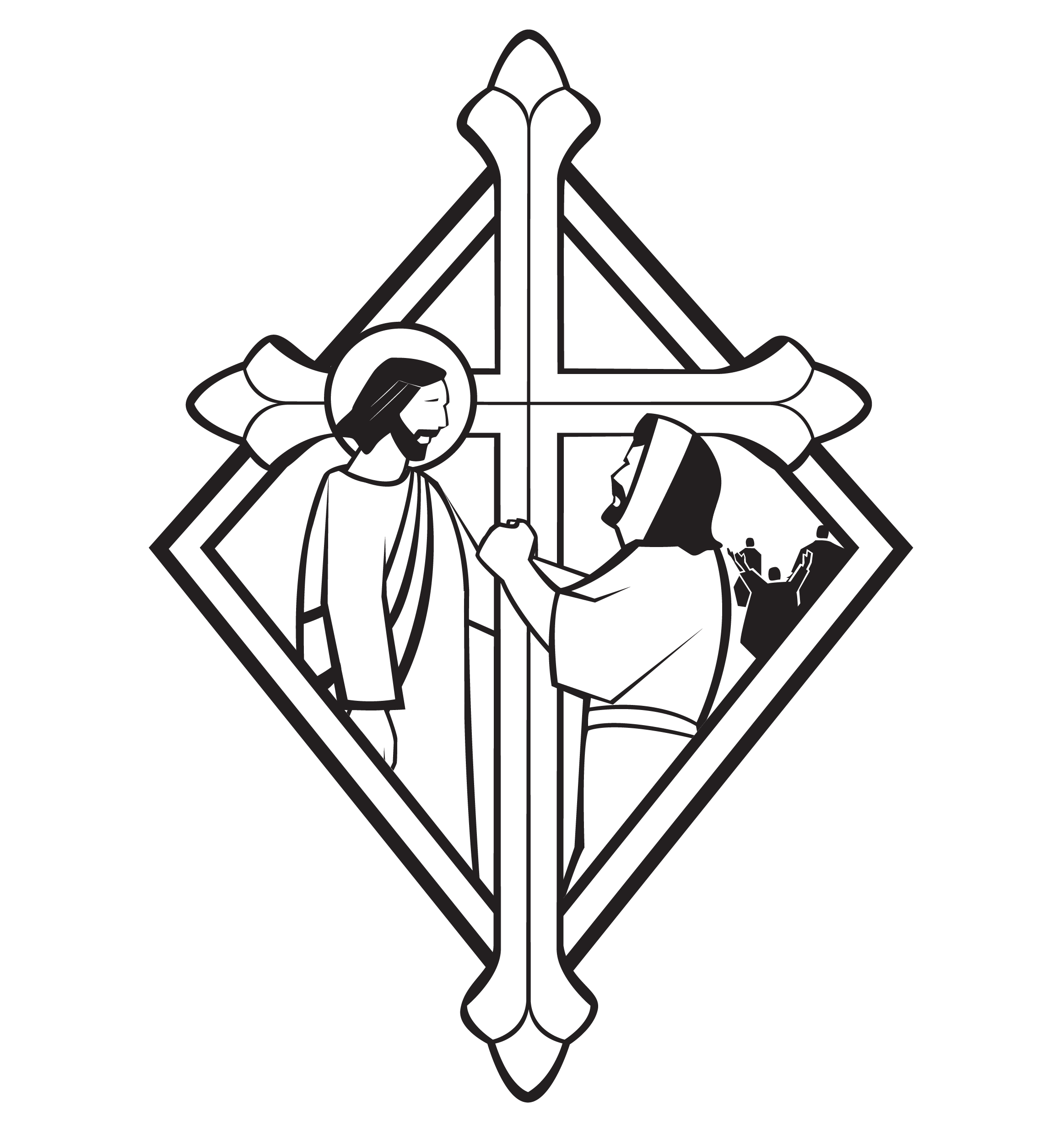
In the midst of unimaginable suffering, Jesus turns His attention to those at the feet of the cross: Mary, His mother, and John, the beloved disciple. He tells Mary, “Woman, behold your son!,” and John, “Behold your mother!” As He is dying, Jesus orders His earthly affairs. He sets His house in order. He provides for His mother and makes sure she is taken care of.
This is more than a touching moment. It shows us how Jesus works. Even in His death, He is still living a perfect life in your place. Fulfilling the Fourth Commandment, honoring His mother. The suffering and pain do not consume Him. He still looks outward, looks beyond Himself and towards the needs of others.
Jesus created a family stronger than the ties of blood. He placed Mary and John in a new relationship, a new family, one in which the strongest tie is Jesus. In our collect, we asked God to “graciously behold this Your family.” Jesus has made us part of His family, placed us in the Church, connected us with one another, where He provides for us and takes care of us.
II. “I thirst!”
John doesn’t put as much of an emphasis on the suffering of Jesus as the other Gospel writers do. But we do get a glimpse of it in the second time he records Jesus speaking from the cross as He says, “I thirst!”
Now, it’s interesting that this comes at the end. Matthew and Mark record that when Jesus is first put on the cross, He is offered sour wine mixed with gall or myrrh, which would have had a numbing effect and dulled the pain. When Jesus learns that it’s doped, He refuses to drink it. He isn’t going to lessen this pain, He doesn’t want to diminish His suffering. So He’s been thirsty the entire time. Why only say so now?
Again, the mindset of Jesus is foreign to us. We so easily become consumed with our own wants and desires. And when they are not met, we lash out and it snowballs and the sin becomes greater. We’ve all been hangry. If just a little bit of hunger can cause us to be mean, what does that say about self control, self denial, how insurmountably strong our desires can be.
Why does Jesus say “I thirst!” only now? Let’s see what John says. “Jesus, knowing that all things were now accomplished.” Jesus denies Himself any creature comforts during His Passion, even a drink. He knows that He has to suffer. And He’s not going to try to get out of that or make that any easier. But when all things have been accomplished, then He can. When His work has been fulfilled, His mission completed, once He has seen to the needs of others, then and only then does He turn to His own needs.
John also says that this was “that the Scripture might be fulfilled.” Again, see what’s on Jesus’ mind. Not just His own needs and how to satisfy them, but how to fulfill the Scriptures. That’s on His mind in the depths of His suffering.
Now, it was prophesied that Jesus would be thirsty (Ps 22:15) and that He would be given vinegar and gall (Ps 69:21), but He rejected that. There’s no prophecy that would require Him to say, “I thirst!” But perhaps that is what He physically needed to have the strength to proclaim the next word. Because it is only “when Jesus had received the sour wine,” that “He said, ‘It is finished!’”
III. “It is finished!”
As Jesus proclaims this final word, it is a word of victory. He does not say, “It is finished” in regard to His suffering. He’s not just happy that this is over now. He’s not thinking of Himself. Jesus isn’t clocking out, He’s reporting to His Father. He says “It is finished” because “all things were now accomplished.” The work of redemption has been completed. Atonement has been won.
This is the cry of victory. Not the whimper of a dying man giving in, but the triumphant shout of a victorious general. The battle is won. Sin is defeated. Death is destroyed. Satan is conquered. Everything that He came to do has been completed. The plan set into action thirty-three years ago, no, since the foundation of the world, is finished. He dies because all has been accomplished. There is nothing left to do. Salvation is won. Victory is secure. Sin has been paid for.
Even in His death, we see that Jesus dies on His own terms. He bows His head and gives up His spirit. He decides when to die. He decides when it’s over. He tells death to come, and death listens. Even death must obey the Lord of Life. As He dies, He shows His power over death. Crucifixion usually ended with a whimper, not a bang. Crucifixion ends with a slow, gradual decline, not a dramatic moment. But Jesus decides when death has had enough. He issues this cry of victory and returns to His Father. Jesus’ death is not the final moment of His suffering. No, all has been accomplished. It is finished. Jesus’ death is filled with joy and peace, the satisfaction of a job well done.
Jesus’ suffering did not overwhelm Him. He overcame. Jesus’ suffering did not absorb Him. He went there with a purpose and accomplished His mission. The crucifixion is not about Jesus’ suffering, but His victory. It’s not an act of senseless violence, but the purposeful act of salvation which He entered with both eyes wide open and accomplished to win our redemption.
This Good Friday, we mourn our sin. We see the horrors that Jesus had to endure because of the wicked acts we have done. We turn to Him with repentant hearts as we see what we deserve. But we shouldn’t feel sorry for Jesus. Jesus is not a victim of injustice. He is the triumphant King. Everything He endured, He endured willingly and purposefully. And all throughout His suffering and death, Jesus turned to the needs of others. He had His eyes on the prize. He had His eyes on you. He suffered take away all your sins that you might live with Him in eternity. He was willing to endure the fires of hell to rescue you from them. He reigns from the cross, drawing all people to Himself. Because there His work is accomplished. Amen.