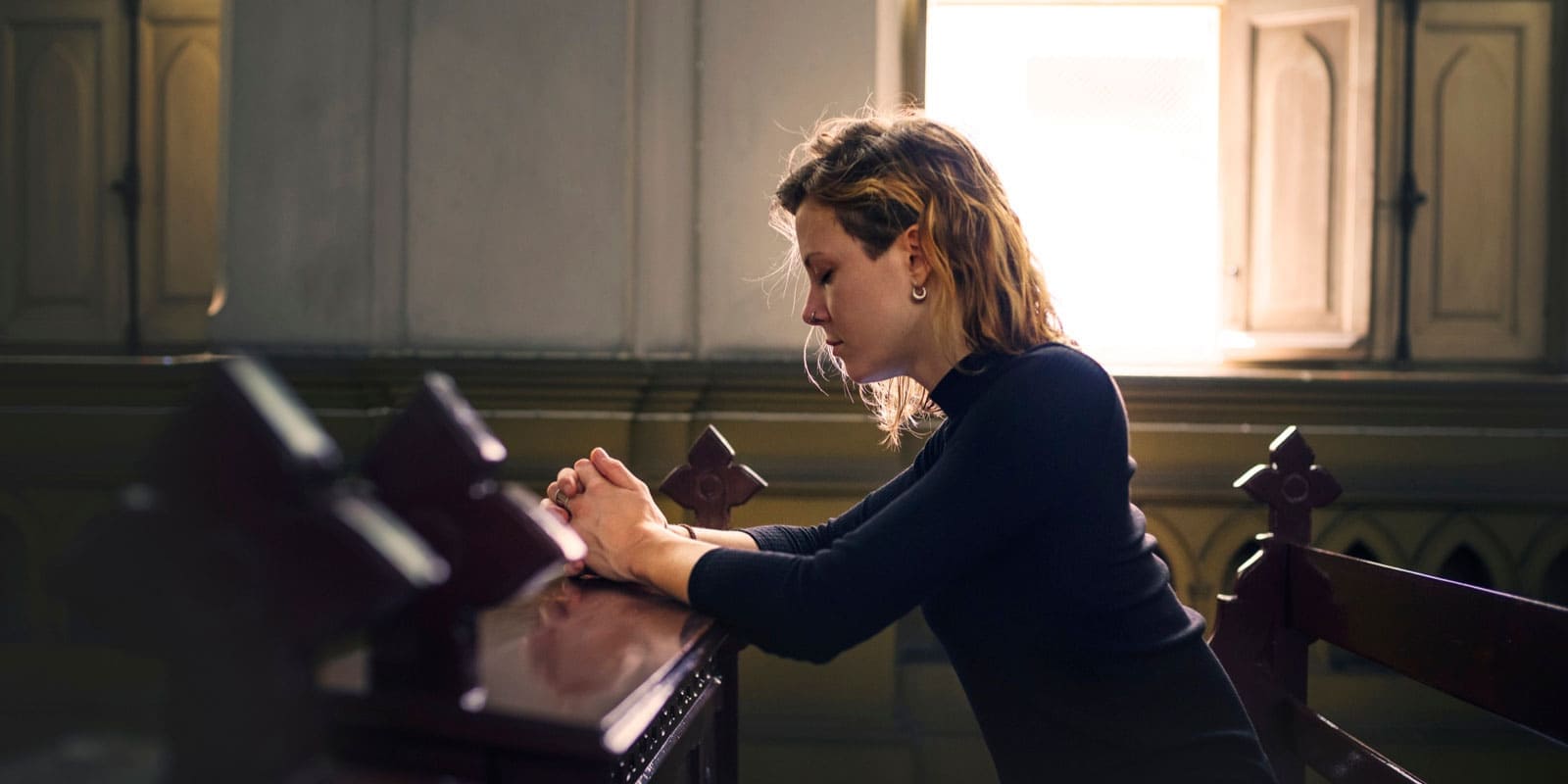
A sermon on Luke 7:11-17 for the Sixteenth Sunday after Trinity. Delivered by Pastor Caleb Strutz.
“Stop crying or I’ll give you something to cry about” is a rather harsh way for a parent to console their child. Of course, it never really works, whenever a child cries, it is for a reason. The disagreement stems from whether or not crying is an appropriate response to whatever might have happened. Crying is often seen as superfluous, doing too much, making a big deal out of nothing, but for the one shedding the tears, it is.
As Jesus tells a mourning widow, “Do not weep,” this should not be understood as Him saying that crying is inappropriate at a time like that. Christ does not demand an unfeeling heart. While His Words are words of comfort, they do contain a gentle rebuke to this woman as Jesus looks forward both to raising her son and to His own, greater resurrection.
I. A Gentle Rebuke
It’s a common platitude in our time to say, “There, there, don’t cry,” at a funeral. But that’s not how we should read our Lord’s words to this widow, this isn’t an empty platitude. Not only because of what He’s going to do, obviously, but there’s even some subtle indicators that this type of crying might be inappropriate.
Now Jesus isn’t chastising this woman for being sad. Certainly that is an appropriate response to death, especially as we see the horrific things that this woman went through, losing first her husband and now her only son. It would be inappropriate for her not to be sad at a time like this. And that’s how Jesus responded to death as well, He wept at the death of His friend Lazarus, even when He knew that He was going to raise Him (Jn 11:35).
So if Jesus can weep even when He knows a miracle is coming, why shouldn’t this woman? Here I think we need to dig a little deeper to see what’s going on. Greek has different words for different kinds of crying. When it says, “Jesus wept” when Lazarus died, this is a silent shedding of tears, a more interior display of sorrow. But when He tells this woman, “Do not weep,” here the precise word used carries a different connotation. This isn’t a subdued weeping, but crying out, wailing, a loud lamentation.
Now that kind of mourning was common in this culture. At times, rich people would hire professional wailers to make a ruckus to show just how important and beloved the deceased was. Now, there’s no reason to suggest that this widow’s wailing wasn’t genuine, but this precise choice of words adds some color to Jesus saying, “Do not weep.”
There’s a sense that maybe she’s carrying on in a way that’s inappropriate. Not that she shouldn’t be sad at all, remember, Jesus wept, but that this kind of wailing is inappropriate for a believer. It’s bordering, if not crossing the line, to mourning as pagans do, to mourning without hope. This isn’t to say that sadness and grief are inappropriate, but that this woman seems to be lost in it and needs this gentle correction and reminder from Christ even before her son is raised.
While this kind of mourning may be a danger for us, I think our culture and society has shifted to the other extreme, has fallen off the ditch on the other side of the road.
No one has a funeral anymore. It’s a celebration of life, conveniently ignoring the appropriate sorrow over death. People tell their kids and grandkids, “Don’t be sad when I die,” as if it would be wrong to feel grief. People talk about “the circle of life” when death is a very definite end. The unique hope that we can offer as Christians is watered down into unhelpful cliches. “Oh, he’s in a better place.” Not everyone. Not necessarily.
Certain kinds of mourning can be inappropriate, but so is no mourning whatsoever. Death should make us sad because it’s not just another part of life, it’s the end of a life as we reap the wages of sin. Death is a real problem and it can’t be solved by euphemism or by technological advances.
People don’t mourn like they used to. We’ve tried to push death into a corner and make the process as painless as possible to the extent that we’ve lost something. People aren’t as afraid of death as they used to be. But nothing’s really changed. It’s still an enemy. Still painful. It can’t be dismissed by platitudes or cliches, it’s still a problem. Still inevitable. Still the punishment for sin. It won’t go away that easy.
II. Pointing to a Greater Resurrection
What’s the difference between mourning and mourning without hope? Sorrow and grief are appropriate, but what’s holding us back from being lost in it? We don’t receive the same immediate comfort when we mourn as this woman did, but as Jesus raises the widow’s son, He foreshadows the reason for our hope. He gives hints of His own resurrection.
There’s a lot of similarities between the widow’s son and our Savior. Jesus is the only-begotten of the Father (Jn 1:14), as this young man was the only-begotten of his mother. At the time of His death, Jesus’ mother was also likely a widow—Joseph drops out of the Gospel narrative after Jesus’ childhood and Mary must be entrusted to John. As Jesus sees this mourning widow, perhaps He is moved to such deep compassion because He sees His own mother. Jesus would be buried outside of the city gates, just as this man was being carried out of the city to be buried.
But even more important than the similarities are the differences. This young man was raised only to die again. Death was not defeated by this resurrection, only temporarily delayed. But when Jesus rose from the dead, death was defeated. He rose and dies no more. He rose, not to return to this fallen realm, but He rose glorious and powerful and incorruptible.
We hope in the face of death, we weep but do not wail, because Jesus died and rose again. He stops this funeral procession in its tracks and trades places with the widow’s son. He would suffer death in his place and He has taken the burden of death from you. He died, so we have nothing to fear, we only follow in His footsteps. He rose, so we have hope, because death does not get the last word.
So how does Jesus’ resurrection change the way we mourn? It gives us hope—but how? How do we weep without wailing? We can still take His words to heart, “Do not weep,” because even though He’s never raised a loved one for you on the way to the cemetery, He will raise your loved ones who have died with the sign of faith. He will raise you. This is greater than what the widow of Nain received in this life. The widow’s son has been dead for two-thousand years at this point, what difference does a couple decades really make? But the life that he has entered, the resurrection that you will experience is far greater.
The death that Christians experience in this life is not the end, but a beginning. Although it is painful for those left behind, for the one who believes, it is the doorway into life everlasting. But it doesn’t end there. It gets better.
St. Paul comforts those who mourn in 1 Thessalonians 4. He describes how Christ will return on the last day to raise the dead into glory, “And thus we shall always be with the Lord” (v. 17). He says that we do not mourn as those who have no hope, “For if we believe that Jesus died and rose again, even so God will bring with Him those who sleep in Jesus” (v. 14).
Because death is still real, we still mourn. Sadness and sorrow, grief and pain, weeping, are all appropriate. But because Jesus died and rose again, we have hope. Our mourning is not destroyed, but sanctified. Even in the midst of death, we look forward to life. Although we weep in this world of sorrow, the day is coming when “God will wipe away every tear from their eyes; there shall be no more death, nor sorrow, nor crying. There shall be no more pain, for the former things have passed away” (Rev 21:4).
The different miracles accounts really do different things depending on where they’re placed in the church year. In the season of Epiphany, it’s all about Jesus showing who He really is, the miracles reveal Him to be God. But that’s maybe not the point of every miracle, especially as we apply these miracles to our lives. The raising of the widow’s son really is an Easter text. Today’s Easter, even though it’s September, because today’s all about the resurrection and the comfort that gives us. The crowd responds to this miracle, “A great prophet has risen up among us.” They don’t know what they’re saying, but how true. He has risen indeed. Alleluia. Because He lives we have hope, even when we mourn. We have life even in the face of death. Amen.